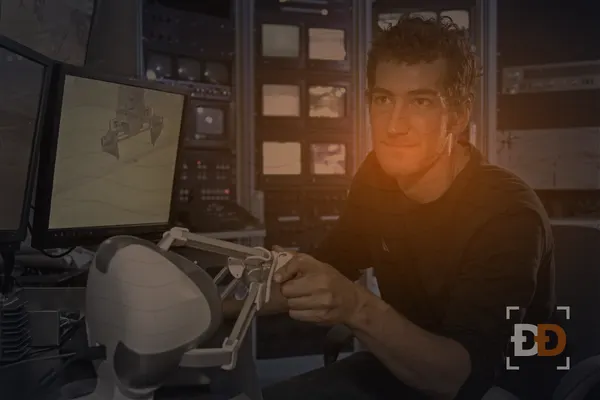
Yes, most robot training jobs are legitimate. Robotics companies pay people to steer robots, run them through tasks in a lab, label what their sensors record and film chores at home, and they hire for these jobs on their own careers pages.
Scammers copy the real jobs because they are easy to imitate. The work asks for little experience, some of it is done from home, and few people know the companies by name. A real robot training job pays you and doesn’t cost you money at any step. The checks below take a few minutes and work for teleoperation, lab data collection, annotation and at-home filming alike.
Real robot training jobs are posted on the company’s own careers page
Find the job on the company’s own website before you apply. Search for the company, open its careers page and look for the same title. A real job is there, with a description, a location and an application form. If the company exists but the job doesn’t appear on its site, someone is probably borrowing its name.
Look at who is writing to you, too. A recruiter at a robotics company writes from the company’s email domain, and the domain matches the website you found yourself. A free email address, or a domain that is one letter off, is a warning sign.
Some teleoperation and data collection jobs are filled through staffing agencies. That is normal in this field. A real agency has its own website and office, tells you which company you would work at before the interview, and pays your wages itself.
A job that asks you for money is a scam
Employers pay for training, equipment and background checks. The requests that mark a scam all move money from you to them:
- A fee for training, onboarding or a certificate before you can start.
- A charge for a background check or for “processing” your application.
- An instruction to buy a headset, a camera or a laptop from a named seller and claim the money back later.
- A check sent to you to buy equipment, with a request to send part of it back. The check bounces days later, after your own money has left your account.
- A deposit, often in crypto or gift cards, to release earnings shown on a dashboard.
Real companies ship you the camera or the headset when a job needs one, and they ask for it back at the end. They don’t ask you to pay first.
Recruiters who only talk by text are a warning sign
Real hiring for robot training has steps you can see. Operators get a tryout on the controls, filming projects ask for a test video, and on-site jobs run a background check. Someone speaks to you by phone or video before an offer.
Be careful when the whole process happens in a messaging app. A scam often looks like this: a stranger contacts you first, the interview is a list of typed questions, the offer comes the same day and you are told to act before the position closes. Each of those steps keeps you from checking who you are dealing with.
Robot teleoperation from home describes what a real tryout tests and what a remote operator’s home setup needs.
Your bank details and ID come after a written offer
A real employer does need your personal details, at the right moment. In the US, you give your Social Security number, your ID and your bank account after you accept a written offer. Employees fill in the I-9 and W-4 forms and a direct deposit form, and contractors fill in a W-9. These usually arrive through an HR or payroll system that carries the company’s name.
Before an offer, an application needs your name, your contact details and your work history. A request in a chat window for a bank login, a card number or a photo of your ID is a scam, whatever reason comes with it.
At-home filming projects are real, and the risk sits in the terms
Getting paid to film yourself doing chores sounds like a scam and usually isn’t one. Robotics companies need first-person video of everyday tasks, and they buy it through platforms that recruit people at home. See robot training video jobs from home for the open projects.
The risk with a real project is in its terms. Read what counts as an approved video before you film, because rejected footage is usually unpaid. A real project tells you the rate per approved video or per hour, how long review takes and how you get paid. It also tells you how the footage will be used and who can see it, and it asks you to keep faces, mail and screens out of the shot.
A platform that holds your earnings until you pay a withdrawal fee, or until you recruit other people, is something else. Close the tab.
Pay that is far above similar jobs deserves a second look
Real robot training jobs state the pay before you start: an hourly rate for shift work, or a rate per approved video or per hour of footage for filming at home. An offer far above what similar jobs pay, for work that needs no skill, is bait.
You can compare. Robot teleoperation jobs and robotics annotation jobs show what employers pay for the open jobs right now, and how robot training jobs work explains which kinds of work pay by the shift and which pay per task.
What to do if you paid or shared your details
Act quickly, since some payments can still be stopped in the first hours.
- Stop replying, and keep the messages, names, phone numbers and payment receipts.
- Call your bank or card issuer, say you were defrauded and ask it to reverse the payment. For a gift card, contact the company that issued the card.
- If you shared your Social Security number or an ID, follow the recovery steps at IdentityTheft.gov, the US government’s site for identity theft.
- Report the scam to the Federal Trade Commission, and to the website or app where you found the job.
- Tell the real company if its name was used. Most robotics companies have a careers or security contact for this.
Be wary of anyone who offers to recover your money for a fee. That is a second scam aimed at people who lost money to the first.
How to check a robot training job in five minutes
- Search for the company and open its website yourself. Don’t use a link from the message.
- Find the same job on its careers page.
- Check that the recruiter’s email domain matches the website.
- Read the job for a location, a shift pattern or a filming requirement. Real jobs are specific about the work.
- Ask how and when you are paid, and who supplies the equipment.
- Walk away at the first request for money, a deposit or a bank login.